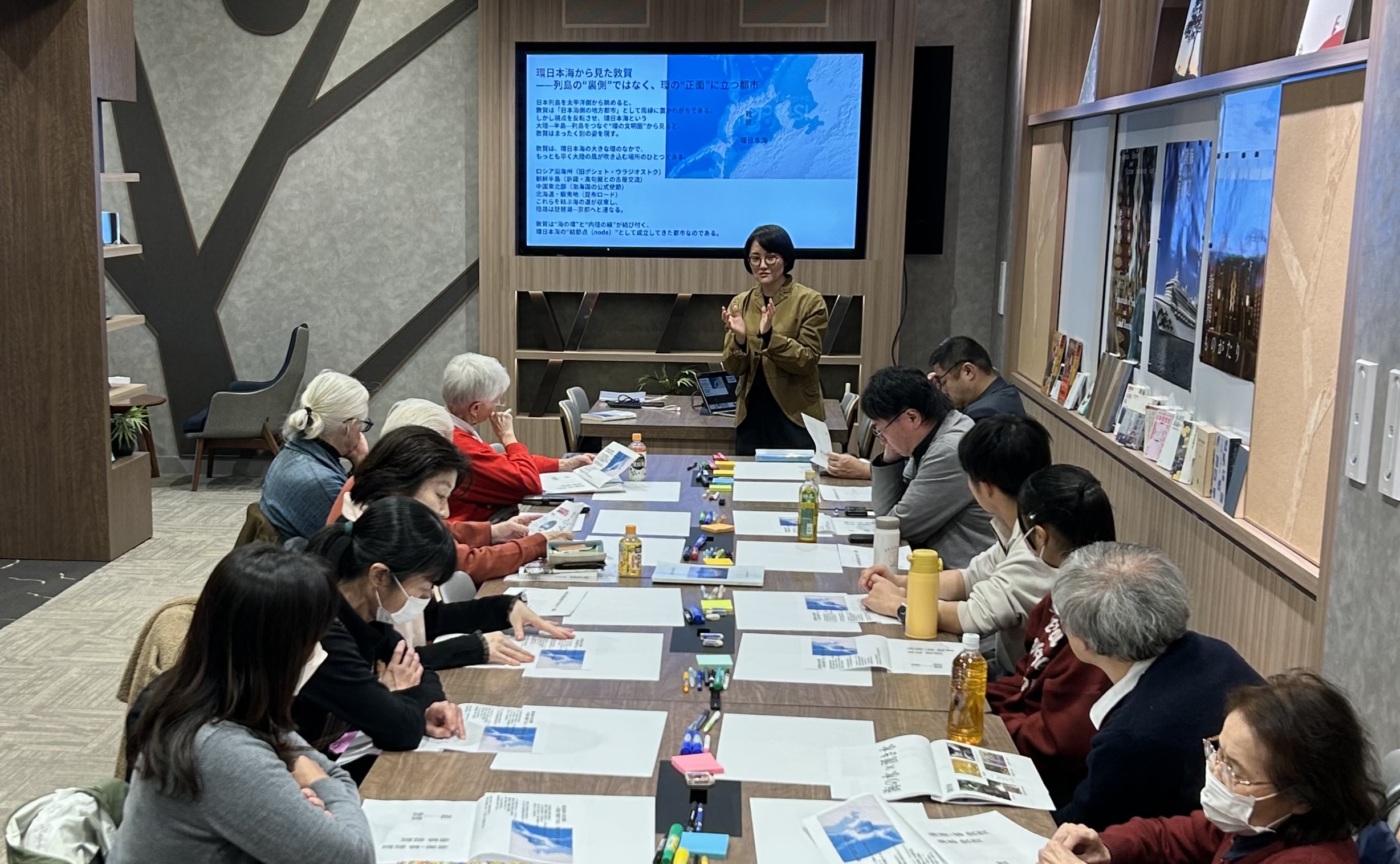
On Saturday, December 13, 2025, the “Tsuruga Story Workshop” was held with the aim of weaving new “storytelling” by combining the city’s proud history and culture.
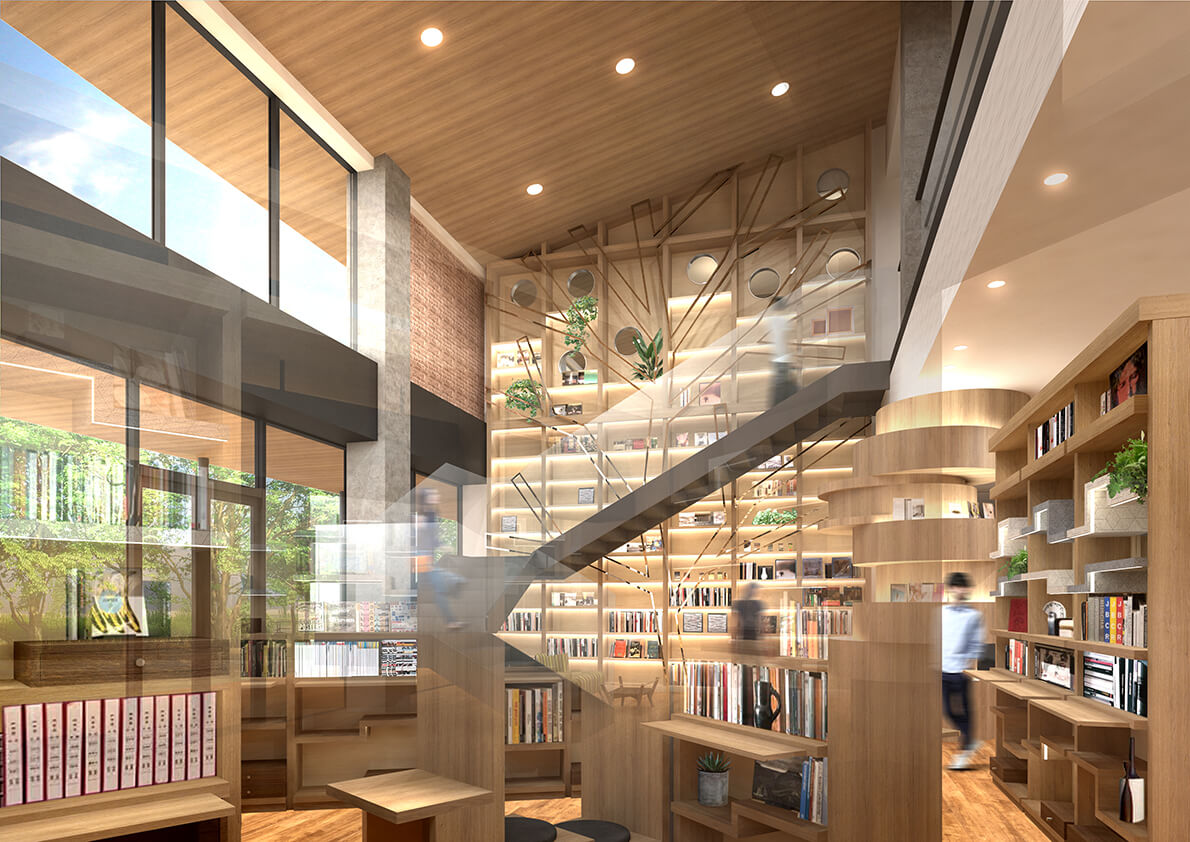
Participants included a diverse group of people from all walks of life and across generations, including junior high school students from the city, university students who have moved to Tokyo, leading local business people, educators, and facilitators, as well as a shopping district leader and a leading figure from the Kehi Historical Society, which has been active for 50 years, as well as historical and cultural experts and overseas intellectuals who came from Kyoto through this connection. The workshop took place at Chienamiki, a bookstore in front of Tsuruga Station. The navigator was Hyakken Co., Ltd., which is responsible for planning and organizing this project.
Tsuruga, seen from the Sea of Japan rim, is the “gateway to Japan,” created by the sea. An inverted image of a map of the Japanese archipelago was projected onto the monitor.
At the beginning, under the theme of “Crossroads where sea roads and land roads intersect,” six roads surrounding Tsuruga, centered around Kehi Jingu Shrine, were introduced. Roads that were originally there but have become difficult to see in everyday life were unraveled one by one as the story of each road, using as clues the traces (trails) left by people and memories and the meanings (stories) that have been retold from them.
Starting with the first lecture, “The Story of Seawater and Freshwater: The Way of Water,” participants then moved on to “The Story of Yorishiro: The Way of Kehi,” “The Story of the Border Between Japan and China: The Bohai Envoys,” “The Story of Umami and Fermentation: The Way of Konbu,” “The Story of Samurai Virtue: The Way of the Warring States Period,” and “The Story of Romance: The Way of International Express Trains.” Each time a new path was introduced, participants enthusiastically shared deeper knowledge and different perspectives.
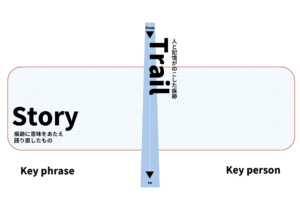
This is the research format for “Tsuruga Monogatari.” The vertical axis represents the traces (Trail) left by people and memories. The horizontal axis represents the meaning (Story) retold from those traces.
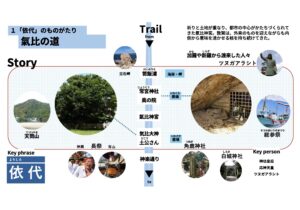
“The Tale of the Yorishiro | The Way of Kehi.” Kehi Jingu Shrine is a city where prayer and the land have come together to form the heart of the city. Tsuruga has welcomed foreign influences, yet retained a core that evokes meaning from within.
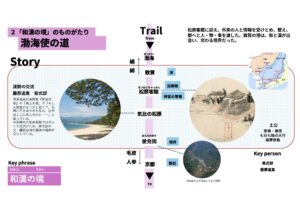
“The Story of the Border Between Japan and China | The Road of the Bohai Envoys.” They welcomed visitors to the Matsubara Guest House, received and organized information from outsiders, and delivered people, goods, and events to the capital. The Tsuruga Port was the border where Japan and China met and intersected.
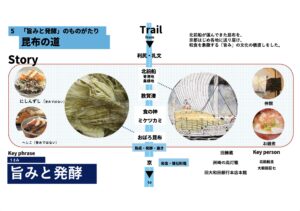
“The Story of Umami and Fermentation: The Road of Konbu.” Konbu, brought by Kitamaebune ships, was delivered to Kyoto and other areas, bridging the cultural divide of umami, a symbol of Japanese cuisine.
In the second half of the event, participants shared their insights and memories of Tsuruga, starting from this journey. One person’s “story” resonated with those around them, sparking new questions and gradually leading to the exchange of unexpected perspectives, making for a rich and enriching experience.
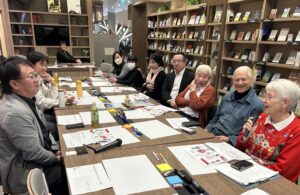
On this day, participants, meeting for the first time, brought with them the scenery of the port town, things they had overlooked in their daily lives, and fragments of history that had been passed down through the generations. The “Tsuruga that they should know” gradually took on a different shape and began to emerge.
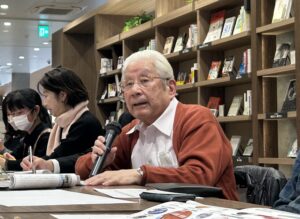
“While we delve into the profound depths of Tsuruga by deciphering the layers of history, we also need new hypotheses that can be told from Tsuruga’s history and culture in settings like this,” says Yoshiaki Kojitani, leader of the Kehi Historical Society.
During the closing session, each participant gave a presentation about their own idea of Tsuruga’s “Road.” Diverse perspectives were presented, including the Road of Seafood, the Hikitafuna River and Canal Road, the road of floats carrying Chinese-style mizuhiki curtains down Kagura Street, the Road of History and Poetry along the Fukasaka Old Road, the Road of Water as a Source of Life, such as the Kuroko River and the town’s wells, the Road of Otani Yoshitsugu and Faith, and the Road of Salt.
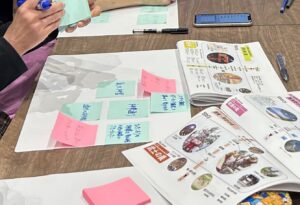
In addition to the “Sea and Lake Road” that connects the waters of the Sea of Japan and Lake Biwa, which is introduced in this project, the participants wrote down nearly 50 roads.
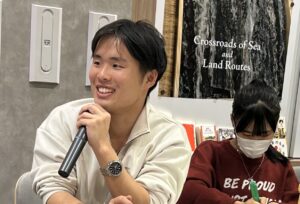
“I’m going to talk about the path of sweets!” exclaimed Kobori Ryouga with a lively voice. He is currently running the “Bokureki (Our History Book)” project, which aims to promote intellectual education and regional revitalization. His family owns Kobori Hinodedo, a confectionery shop in Tsuruga that was founded in 1901.
As participants relived their memories, pieced together what they had seen and heard, and spun them into words, a story of Tsuruga compiled from each individual’s perspective emerged, providing an opportunity to once again experience the multi-layered charms that Tsuruga holds.