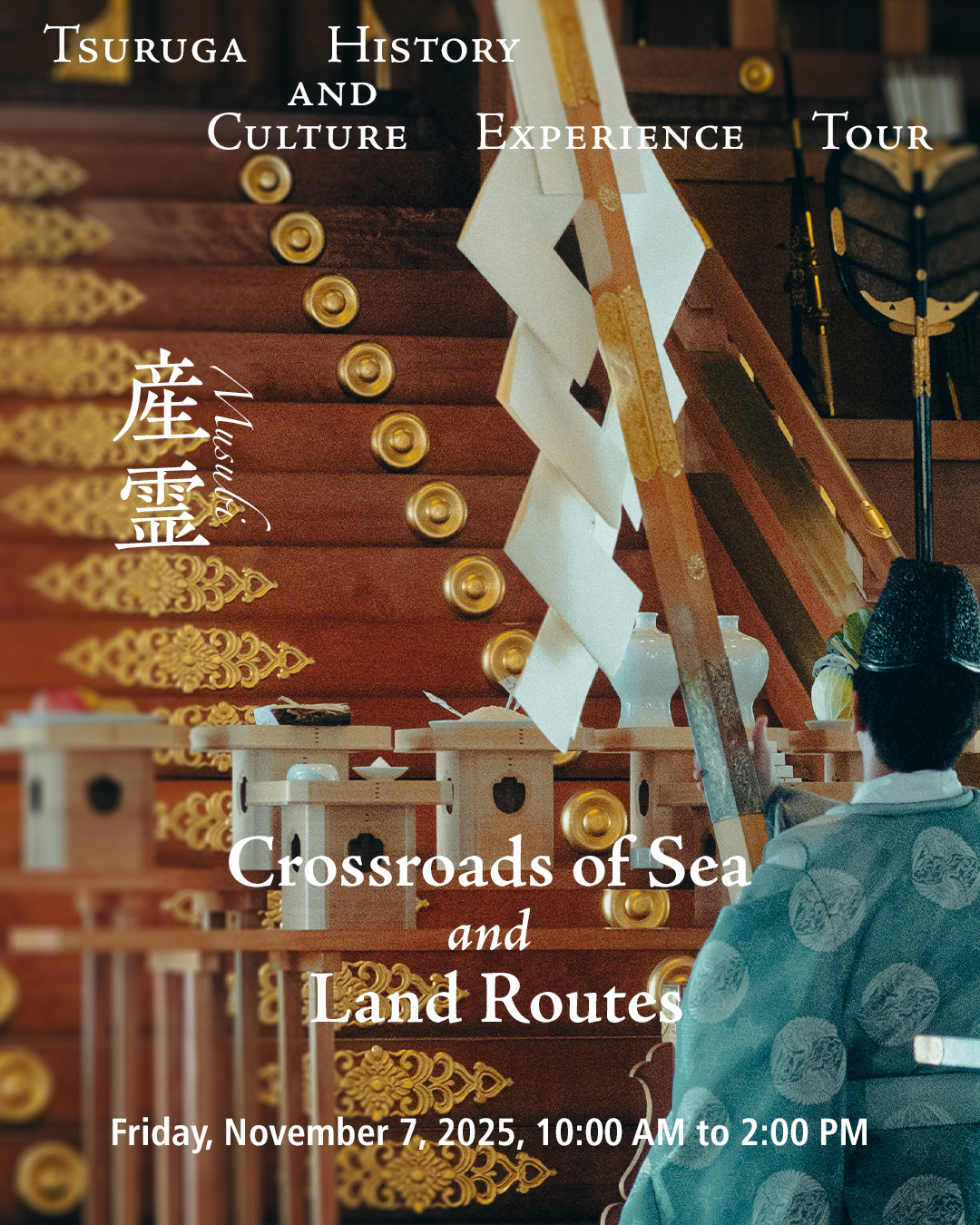
On November 7, 2025, Tsuruga City hosted a historical and cultural experience tour, “A Crossroads Where Sea and Land Roads Intersect,” as part of the “Tsuruga Story Creation Project,” a nationally subsidized initiative. This tour, aimed at passengers of the Diamond Princess cruise ship, which docked at Tsuruga Port, explored the history and culture of Tsuruga through a storytelling experience.
Focusing on Tsuruga’s history as a strategic crossroads between land and sea, the tour introduced the concepts of prayer at the heart of Japanese culture, such as “barriers,” “water,” and “creative spirits,” at Kehi Jingu Shrine. The tour also explored the spiritual aspects of spring water and sound. Next, at Okui Kaiseido, a long-established kelp merchant, participants learned about the process of aging kelp delivered by Kitamaebune ships in a storehouse to enhance its flavor, experiencing the wisdom and techniques inherent in food culture. Furthermore, participants enjoyed Italian cuisine made with kelp broth, experiencing the unique Japanese aesthetic of “awase,” or “combining different elements.” It was a day where we were able to get in touch with the essence of Japanese culture through stories unique to Tsuruga.
As soon as we announced our Tsuruga history and culture experience tour, “A Crossroad Where Sea and Land Roads Meet,” it was quickly fully booked.
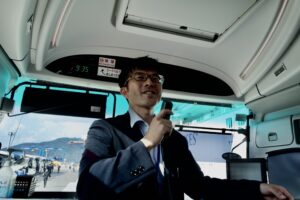
Mr. Tomoyuki Shibata of Tsuruga City Hall, who oversees the Tsuruga Story Creation Project, gave a welcoming speech. He spoke of his enthusiasm for the Tsuruga History and Culture Experience Tour, which will be fully operational next year.
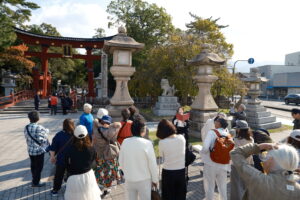
Kehi Jingu Shrine is a typical Shinto-Buddhist syncretism site where “gods and Buddhas have been enshrined together” since ancient times. The large torii gate that stands within the shrine grounds is one of Japan’s three largest wooden torii gates, alongside those of Kasuga Taisha Shrine and Itsukushima Shrine.
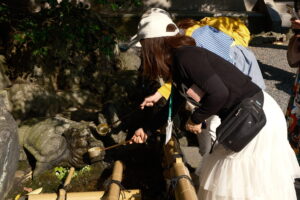
For over 1,300 years, it has been worshipped as a sacred water that harbors the divine virtues of the gods, and has been affectionately known as “Chomei-sui” (Water of Longevity). This sacred area is protected by abundant spring water.
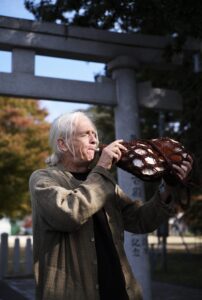
In front of the Doko, we listened intently to the sound of the conch shell. The performer was Everett Brown, who conveys the ancient layers of Japanese spirituality and culture to the world through photography, words, and sound.
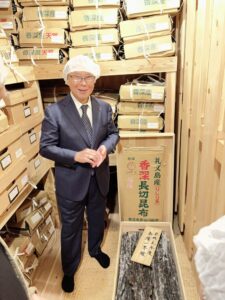
Tsuruga, the base of the Kitamaebune ships, is a sacred place for kelp culture, watched over by Miketsu-Okami, the god of food at Kehi Jingu Shrine. Okui Takashi, president of Okui Kaiseido, established the value of “Kuragakoi Konbu,” high-quality kelp that is aged for several years.
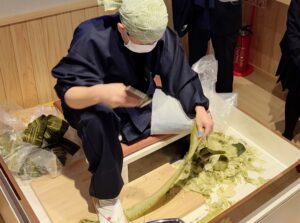
Oboro konbu is a processing technique that developed in the Hokuriku region during the Muromachi and Edo periods. Tsuruga became a base for transporting konbu from Hokkaido on the Kitamaebune ships, and advanced processing techniques were honed here.
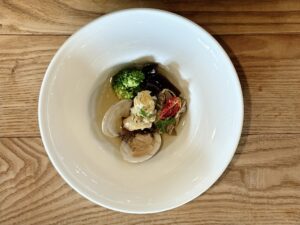
Chef Tuyoshi Yamamoto of Sonyopoli creates a course meal using kelp. He values the local production and consumption style of using ingredients from Fukui Prefecture as much as possible.